
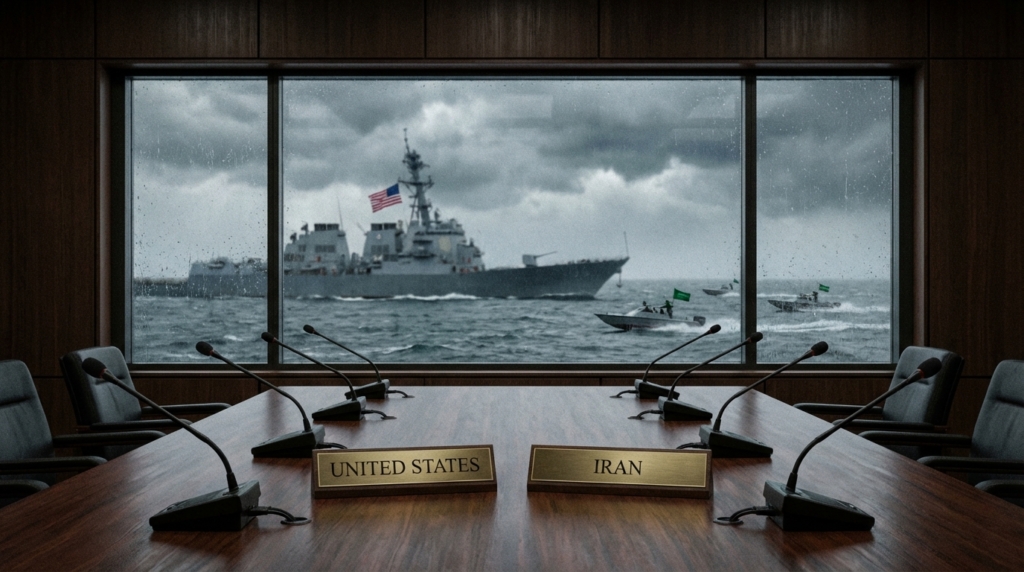
Iranian leadership sanctions direct dialogue with the United States in Istanbul this Friday, following regional mediation and a significant American military buildup in the Persian Gulf.
Iranian President Masoud Pezeshkian confirmed today that his administration will engage in diplomatic talks with the United States, marking a potential de-escalation in a standoff characterized by mutual threats of military force. The decision follows diplomatic interventions by “friendly governments in the region” urging Tehran to respond to American overtures.
According to a statement released on the social media platform X, President Pezeshkian has instructed Foreign Minister Abbas Araghchi to lead the delegation. However, the Iranian leader emphasized that progress is contingent upon Washington abandoning “unreasonable expectations” and hostile rhetoric.
These negotiations shall be conducted within the framework of our national interests provided that a suitable environment exists – one free from threats.
Diplomacy Under Pressure
The diplomatic breakthrough coincides with aggressive signaling from the White House. U.S. President Donald Trump, while addressing the press regarding the potential for a deal, maintained a stance of maximum pressure. While noting that a successful accord would be “great,” he explicitly warned that failure to reach an agreement would result in severe consequences.
To underscore this position, the Pentagon has accelerated the deployment of naval assets to the region. President Trump described the flotilla, which includes the aircraft carrier USS Abraham Lincoln and its air wing of approximately 70 jets, as a “tremendous force.”
The urgency for talks is underscored by recent history. Last year, the United States executed “Operation Midnight Hammer,” a series of targeted strikes against Iranian nuclear infrastructure. This campaign followed similar large-scale operations by Israel aimed at dismantling Tehran’s nuclear capabilities and eliminating key scientific personnel.
Domestic Instability
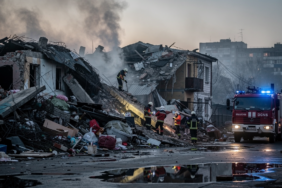
The geopolitical tension is mirrored by severe internal unrest within Iran. The country has been rocked by widespread demonstrations that began over economic grievances but rapidly evolved into calls for regime change. Security forces have responded with lethal force, a crackdown described by witnesses as unprecedented in its intensity.
Discrepancies regarding the casualty toll remain significant. While Iranian authorities acknowledge 3,117 deaths, independent monitors report much higher figures. The U.S.-based Human Rights Activists News Agency (HRANA) has documented 6,430 fatalities among protesters, including 152 minors, with thousands of cases still under investigation. Norway-based Iran Human Rights (IHR) estimates the final death toll could surpass 25,000.
Reports indicate that Iranian officials have privately briefed Supreme Leader Ayatollah Ali Khamenei that the level of public fury has eroded the effectiveness of fear as a tool for social control. Despite this, Khamenei has publicly warned that any external military aggression against Iran would trigger a wider regional conflict.
Foreign Minister Araghchi, speaking to international media ahead of the Istanbul summit, expressed cautious optimism, stating he remains “confident that we can achieve a deal.”
SOURCES: The White House, Office of the Iranian Presidency, CNN, Reuters, HRANA, Iran Human Rights (IHR), BBC.
This report has been significantly transformed from original source material for journalistic purposes, falling under ‘Fair Use’ doctrine for news reporting. The content is reconstructed to provide original analysis and reporting while preserving the factual essence of the source.