

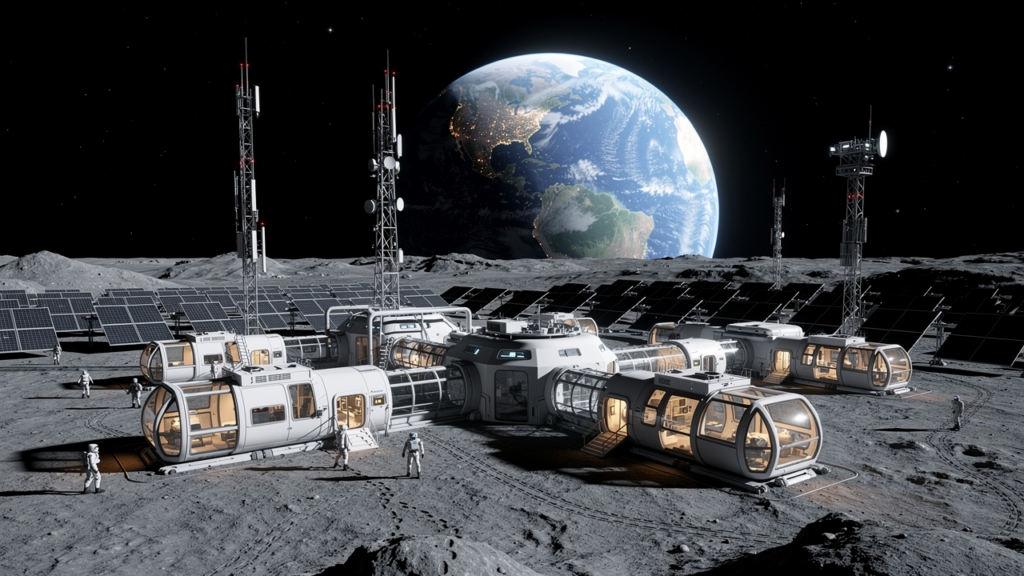
NASA is utilizing its return to the Moon as a critical proving ground for the life-support and energy technologies required for an eventual Mars landing.
The Artemis II mission, scheduled for launch within days, represents the apex of NASA’s $93 billion effort to master long-duration space habitation. While the mission will only orbit the Moon, it paves the way for a permanent lunar base designed to test infrastructure that will later be deployed on Mars. Engineers are focused on solving the challenges of radiation shielding, extreme temperature regulation, and power generation in a harsh extraterrestrial environment.
Libby Jackson, head of space at the Science Museum, emphasizes that the Moon is the only safe environment to perfect these technologies. If life-support systems fail on Mars, the results would be fatal; on the Moon, the proximity to Earth allows for a safety margin that makes experimentation possible. This includes learning how to extract water from lunar minerals to provide air for breathing and fuel for return journeys.
“These are all technologies that if you try them for the first time on Mars and they go wrong, it’s potentially catastrophic. It’s much safer and much easier to try them out on the Moon,” Jackson asserts.
Beyond the technological hurdles, the mission serves an economic and social purpose. By streaming the voyage in high definition, NASA intends to foster a thriving space economy and inspire a new generation of engineers and mathematicians. The agency believes that the commercial spin-offs and workforce development sparked by the Artemis program will provide a long-term return on the massive public investment.
“Space has a brilliant ability to excite people about those subjects… we need scientists, engineers and mathematicians,” says Libby Jackson.
SOURCES: NASA, Science Museum, Natural History Museum.
This report has been significantly transformed from original source material for journalistic purposes, falling under ‘Fair Use’ doctrine for news reporting. The content is reconstructed to provide original analysis and reporting while preserving the factual essence of the source.