
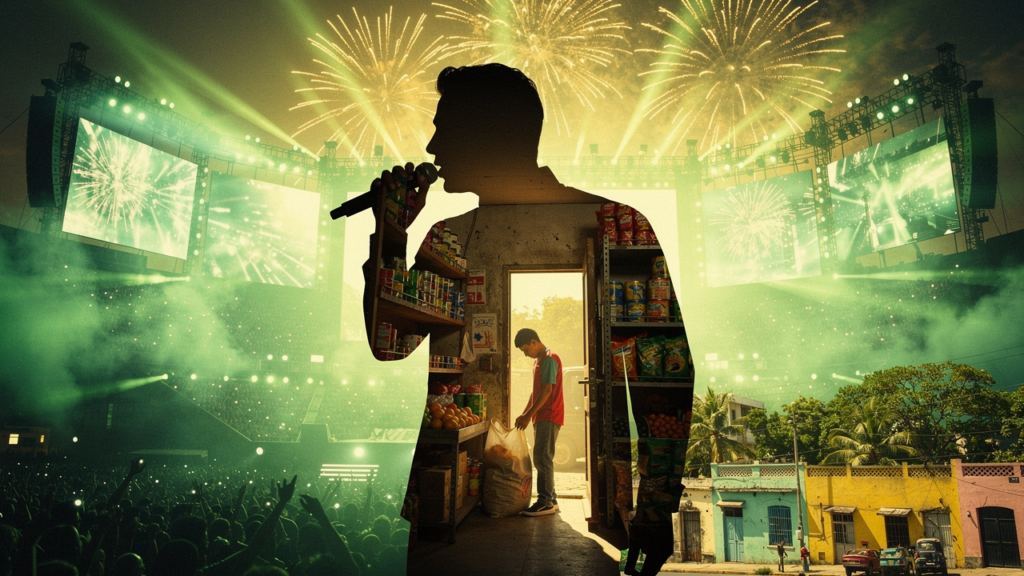
The chart-topping artist used the Super Bowl spotlight to validate a dialect and culture often marginalized in mainstream media.
Beneath the pyrotechnics and celebrity cameos of Sunday’s Super Bowl halftime show lay a pointed narrative about Puerto Rican identity. Performing to a television audience of 125 million, Bad Bunny offered a vindication of Puerto Rican Spanish—a dialect often criticized as “unintelligible” by outsiders—by refusing to sing in English.
The setlist included tracks like “LA MuDANZA,” which references the historical persecution of the island’s independence movement, and “Ser Bichote,” a song detailing the grim economic reality where drug distribution spots, or “puntos,” replace closing schools. The performance also integrated cultural symbols such as the “pava” (a traditional farmer’s hat) and the endangered Puerto Rican crested toad.
From Grocery Bagger to Global Icon
The artist’s rise from bagging groceries in Vega Baja to performing with Lady Gaga resonates deeply with Puerto Ricans who share his working-class roots. Much like many on the island, Martínez Ocasio grew up in a rural town, the son of a truck driver and a schoolteacher, far removed from the entertainment industry.
The performance comes as Puerto Rico continues to grapple with bankruptcy, mass migration, and a lack of voting representation in the U.S. government. For many observers, Bad Bunny’s refusal to compromise his language or lyrical content represents a cultural triumph over these political limitations.
SOURCES: BBC, Census Data, Academic Analysis by Prof. Albert Laguna.
This report has been significantly transformed from original source material for journalistic purposes, falling under ‘Fair Use’ doctrine for news reporting. The content is reconstructed to provide original analysis and reporting while preserving the factual essence of the source.