
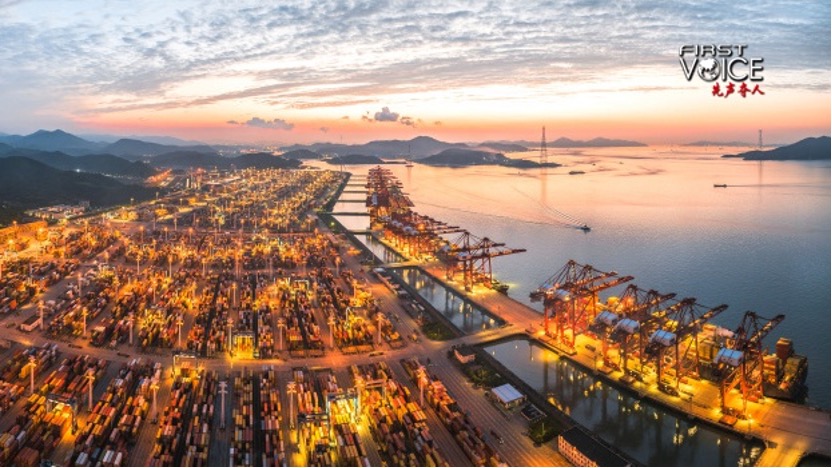
Representatives from 20 international cities across 15 nations assembled Tuesday in the port city of Ningbo for the 2026 Global Mayors Dialogue, sealing 14 bilateral agreements alongside the Ningbo Consensus to foster cross-border cultural ties, open commerce, and sustainable urban growth.
Held under the theme “Shared Opportunities for Openness and Connectivity,” the summit formalized partnerships covering sister-city exchanges, trade, investment, science, education, culture, and tourism. Leaders positioned cities as essential engines for mutual benefit and shared modern development.
“The city’s opening up is not a one-way outward orientation, but means two-way integration into global industrial and innovation chains,” said Ningbo Mayor Shen Mingquan.
Cultural Artifacts and Global Urban Alliances
Cultural diplomacy took center stage during the exchange sessions, where distinctive regional artifacts were showcased alongside economic pacts. The presentation featured a copper plate document from Laamu Atoll in the Maldives, a scarab beetle figurine from Suez, and traditional Normandy confectionery presented by Saint-Étienne, France, highlighting the Consensus’s focus on interpersonal and community connections.
Discussions also highlighted specific regional lifestyle and trade links. Auckland Mayor Wayne Brown outlined how South Pacific transit points connect remote regions, while Mayor Karimi Said of Errachidia, Morocco, underscored oasis agriculture and dates as vital global conduits. The Maldives continues to rank among the top 10 overseas travel destinations for Ningbo residents, who also regularly consume Moroccan dates and New Zealand milk powder.
Ningbo currently maintains economic and trade relations with over 220 countries and regions worldwide. Local enterprise Dashun Fur previously deployed a 40 million USD investment into Egypt’s Suez Canal Economic Zone following municipal delegations in 2024, spanning manufacturing, textiles, and modern logistics.
Customs data reflects that China’s total goods trade reached 45.47 trillion yuan (6.51 trillion USD) in 2025, marking a 3.8 percent year-on-year increase, with exports at 26.99 trillion yuan (4.06 trillion USD) and imports at 18.48 trillion yuan (2.78 trillion USD). Belt and Road partners accounted for 51.9 percent of the total volume, underscoring ongoing international interdependence.