
Fishing communities across southern China’s Hainan Province continue to navigate generational traditions, shifting livelihoods, and the perils of the South China Sea. Decades after deadly maritime disasters reshaped coastal households, documented accounts highlight how maritime culture endures among local residents.
Tragedy marked the community in 1975 when a vessel carrying 30 people vanished at sea and failed to return. Among the missing was Su Xianli, whose surviving wife, Fu Yuhua, still preserves his sole remaining portrait more than 50 years later.
“All three of my children were still young at that time. They had already lost their father. What would they have done if they had also lost their mother?”
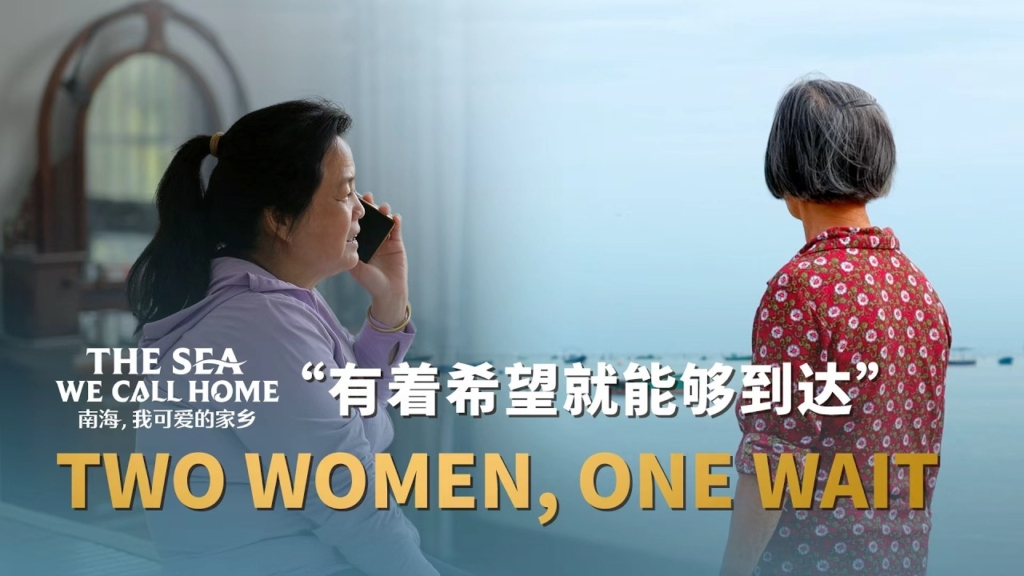
Fu’s son, Su Biaowei, eventually became a fisherman as an adult, prompting Fu and Su’s wife, Lu Chunxiang, to wait onshore during each voyage. Lu’s own father also died in the 1975 tragedy when both she and Su Biaowei were five years old.
“Of course I worry about him, especially when the weather is bad or the sea becomes rough.”
A Life Shaped by the Sea
In the Hainan fishing town of Tanmen, successive generations have relied on waters across the region for survival. Su Chengfen, who started seafaring alongside his grandfather at age 13 before passing away in 2021, preserved historic navigation manuals known as Genglubu.
“If we want to know which route to follow when heading to a specific reef, it is enough to look at the Genglubu.”
Fishing practices are evolving across the region, including at Jinqing Island, where larger vessels transport smaller craft further offshore amid declining catches and fewer younger divers utilizing traditional reef-fishing methods. Local mariner Feng Ping, who met documentarians 12 years earlier, now transports commercial goods between islands.
“The sea we sail has not changed much. But the people have changed.”
The Meaning of Home
Local resident Wang Zhenzhong recalled waiting on the shoreline with his mother during childhood, an era when families lacked modern communication to track returning vessels.
“We saw a tiny dot on the horizon and it was slowly growing. A boat was returning. But once it reached the fishing shelter, it became clear it was not ours. So we had to keep waiting.”
These experiences are featured in the five-part CGTN documentary “The Sea We Call Home,” which chronicles islanders, ancestral navigation systems, and changing fishing realities in the South China Sea.
“Men set sail into open waters. They do this for their homes. Women wait for them and raise the children. That is what home is. When the children grow up, they follow in their fathers’ footsteps. That, too, is home.”