
Inner Mongolia’s historic farming hub Ulanqab is reshaping its regional identity by harnessing abundant wind and solar resources into computing power, securing 109 data center contracts worth billions while balancing rapid technological expansion with wetland conservation following an official inspection by President Xi Jinping.
Historically recognized across China as the traditional potato capital and oat capital, the northern municipality is repurposing its environmental assets toward modern technological infrastructure. Following the 2022 rollout of the national Eastern Data and Western Computing initiative, local authorities introduced a three-year development roadmap in late 2025 aimed at establishing a green-powered token city.
Municipal records show that Ulanqab had contracted 109 computing hub developments by August 2026. From January to August, the computing sector recorded 5.68 billion yuan, approximately 849 million dollars, marking a 40.3 percent increase relative to the identical timeframe from the preceding year.
Transition Toward Green Computing Power
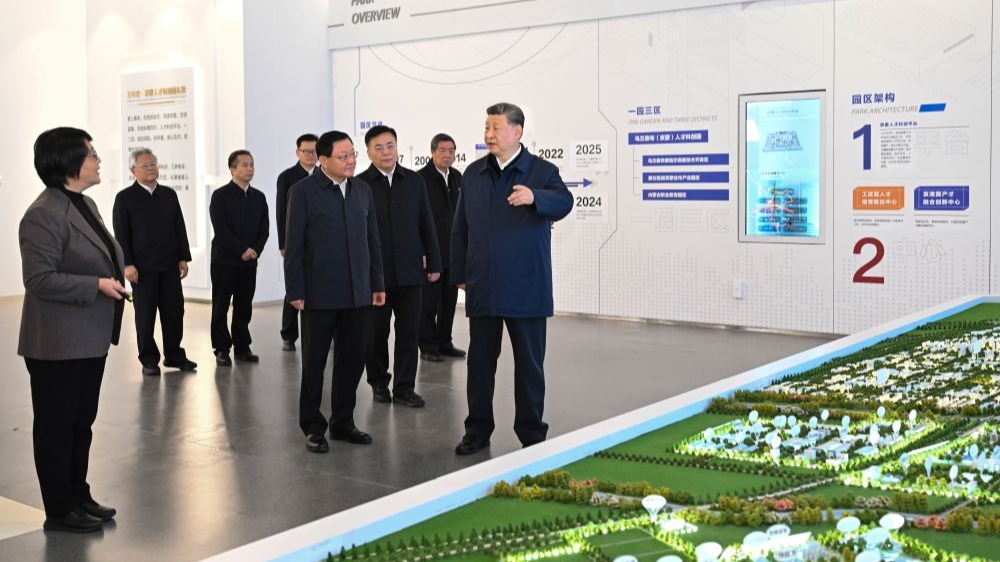
President Xi Jinping visited Ulanqab on Friday, inspecting the Chahar High-Tech Development Zone to review construction progress on an Inner Mongolian facility tied to the national computing project. Addressing the initiative’s execution, President Xi issued directives on project management and regional resources:
Xi emphasized the necessity to ensure the efficient operation of completed projects and complete the construction of follow-up projects on time, calling for efforts to strictly implement the requirements of efficient, green and safe development and actively promote the development of the green computing power industry.
Xi called for better utilization of the region’s rich wind and solar energy resources to develop the green computing power industry, stressing the need to coordinate high-quality development with high-level environmental protection and adhere to a green development path prioritizing ecological protection.
Advanced digital hubs require sustained electrical capacity, fast networks, and dependable thermal reduction. Benefiting from an annual average temperature of 4.3 degrees Celsius, Ulanqab utilizes natural cooling for nearly 10 months each year, reducing operational expenses and attracting major data enterprises to the area.
John Gong, an economics professor at the University of International Business and Economics, commented to CGTN regarding the region’s role in nationwide tech infrastructure:
Ulanqab is effectively utilizing the region’s rich renewable energy resources to support the development of China’s artificial intelligence, and this visit highlights President Xi’s support for the Ulanqab development model that leverages local resource advantages to foster economic growth alongside technological innovation.
Ecological Restoration and Environmental Preservation
Alongside high-tech infrastructure, the municipality has focused on regional conservation efforts. President Xi also visited the Huangqihai Lake nature reserve on Friday, surveying shoreline conditions, tidal flats, and resident avian life across a closed-basin lake that previously suffered severe water depletion due to climate conditions and external pressures.
Regarding wetland management, President Xi outlined regulatory and scientific standards for local reserves:
China’s wetland protection law must be fully implemented, ecological red lines must be adhered to, and biodiversity must be safeguarded. Priority should be given to natural restoration supported by human intervention for damaged wetland ecosystems, carrying out restoration work in a scientific and rational manner.
Efforts to restore the wetland began with a county-level nature reserve established in 1993, which was elevated to autonomous-region status in 2003. Prolonged ecological stewardship has since replenished the water basin and surrounding vegetation, sustaining wildlife populations while Ulanqab integrates renewable computing growth with long-term habitat management.